travel

  • Less Gear, More Walkabout

    I spent another week on a walkabout, traveling through New York, New Jersey, Maryland, Delaware, Virginia, West Virginia, and Pennsylvania. As always, photography was an important part of the experience. This time, however, the way I approached it was different.

    Normally, I travel with several cameras and two or three times as many lenses. For this trip, everything fit into one small backpack: a Panasonic Lumix S9 with an 18–40mm lens and the L10 with its built-in 24–75mm lens. Truth be told, the S9 came out of the bag on only one of the first few days. After that, the L10 handled nearly everything.

    Traveling with an ever-smaller collection of gear has long been one of my goals—especially when a walkabout happens on a motorcycle. Space is limited, every extra item adds weight, and complicated choices can get in the way of simply paying attention.

    This trip showed me that the L10 could handle just about anything my admittedly suspect photography skills asked of it. It was equally at home recording the sweep of a landscape and revealing the tiny details hiding beside the road: sunlight caught in the delicate fibers of a thistle, or the intricate markings of a wasp balanced on a cluster of flowers.

    Those small scenes were easy to overlook amid seven states and so many miles. Having a capable camera close at hand made it just as easy to stop and look again.

    I returned home with more than 1,500 photographs—not that quantity means much by itself. What mattered was that the cameras handled everything I pointed them at. More importantly, I never once wished I had brought another camera body or lens along for the ride.

    Perhaps that is the real advantage of traveling light. With less equipment to think about, there is more room to notice what is right in front of you.

    Contributor:

    In


  • Gold Wing Tracks

    I’ve been spending this week in partnership with the Gold Wing, winding South primarily along Skyline Drive (Shenandoah National Park) and the Blue Ridge Parkway.

    Across the past several days I’ve heard from family and friends who are checking to ensure I am well (I am). For that I am deeply grateful. They have also asked about the website updates that traditionally coincide with one of my walkabouts.

    (more…)

    Contributor:

    In


  • Pleasant Hill

    The cliché is that Kansas is flat and you can see for miles. The truth is that the cliché is correct.

    A long, considerably straight drive eventually delivered us to the Pleasant Hill Cemetery to offer our respects to relatives.

    Before leaving, I spent several minutes standing in the middle of the intersection, photographing the scene in every direction—two intersecting roads, one small seemingly abandoned building, and about 50 headstones. It felt strangely unnatural. From childhood, we’re taught that the middle of an intersection is precisely where we should never linger. Cross quickly, stay alert, and don’t become part of the traffic report. But in Green, Kansas, where the Pleasant Hill Cemetery is located, the rules seem a little different. You can see approaching traffic from so far away that you have ample time to finish your photograph, check your camera settings, reconsider your composition, and perhaps even contemplate a few of life’s bigger questions before a vehicle arrives. The intersection may not have been designed as a scenic overlook, but on that day, it served the purpose remarkably well.

    And for the 90 (or so) minutes we were there, there was no traffic.

    (more…)

    Contributor:

    In


  • Eat At Joe’s

    Stepping out of the hot street in downtown Nashville and into a small diner, the clock on the wall quietly proclaimed, “Eat at Joe’s”.

    That phrase has become as much a part of American roadside culture as chrome stools, bottomless coffee cups, and handwritten specials on a chalkboard. To generations of travelers, myself included, it evokes memories of small-town diners, family road trips, and the simple pleasure of finding a welcoming place to pause along the way. Even those who have never stopped at a diner named Joe’s have likely encountered the slogan somewhere before. It feels instantly recognizable as it belongs to a shared memory of America’s highways and back roads.

    Like many other memorable pieces of Americana, “Eat at Joe’s” has a story of its own.

    The phrase is believed to have originated in the 1930s when a small restaurant owner named Joe in California was struggling to attract customers. According to popular accounts, a pilot friend began flying overhead with a banner encouraging people to “Eat at Joe’s.” Whether every detail of that story is perfectly accurate has been debated over the years, but what is certain is that the slogan quickly captured the public imagination.

    By the middle of the twentieth century, “Eat at Joe’s” had become a cultural icon. The phrase appeared on signs, menus, advertisements, clocks, postcards, cartoons, and movie sets. It was no longer advertising a particular restaurant—it had become a symbol for every diner, café, and roadside eatery that welcomed hungry travelers. Its meaning expanded beyond a place to eat and became shorthand for hospitality, comfort, and the uniquely American tradition of discovering memorable places between destinations.

    Today, seeing those three simple words still conjures images of open roads, neon lights, and small-town diners where the coffee is always hot and the stories are often as rich as the homemade pie. For travelers, photographers, and wanderers alike, “Eat at Joe’s” serves as a reminder that some of the most memorable moments are found not at the end of the journey, but somewhere along the way.

    Contributor:

    In


  • That Will Never Fly

    If you haven’t had too much wine by the time you get to Hammondsport, NY, deep in the Finger Lakes Region of NYS, you can’t go wrong spending some time at the Glenn H. Curtiss Motorcycle & Aviation Museum. These images were captured during one of the many times I’ve enjoyed visiting this location.

    Contributor:

    In


  • Southbound In A Car

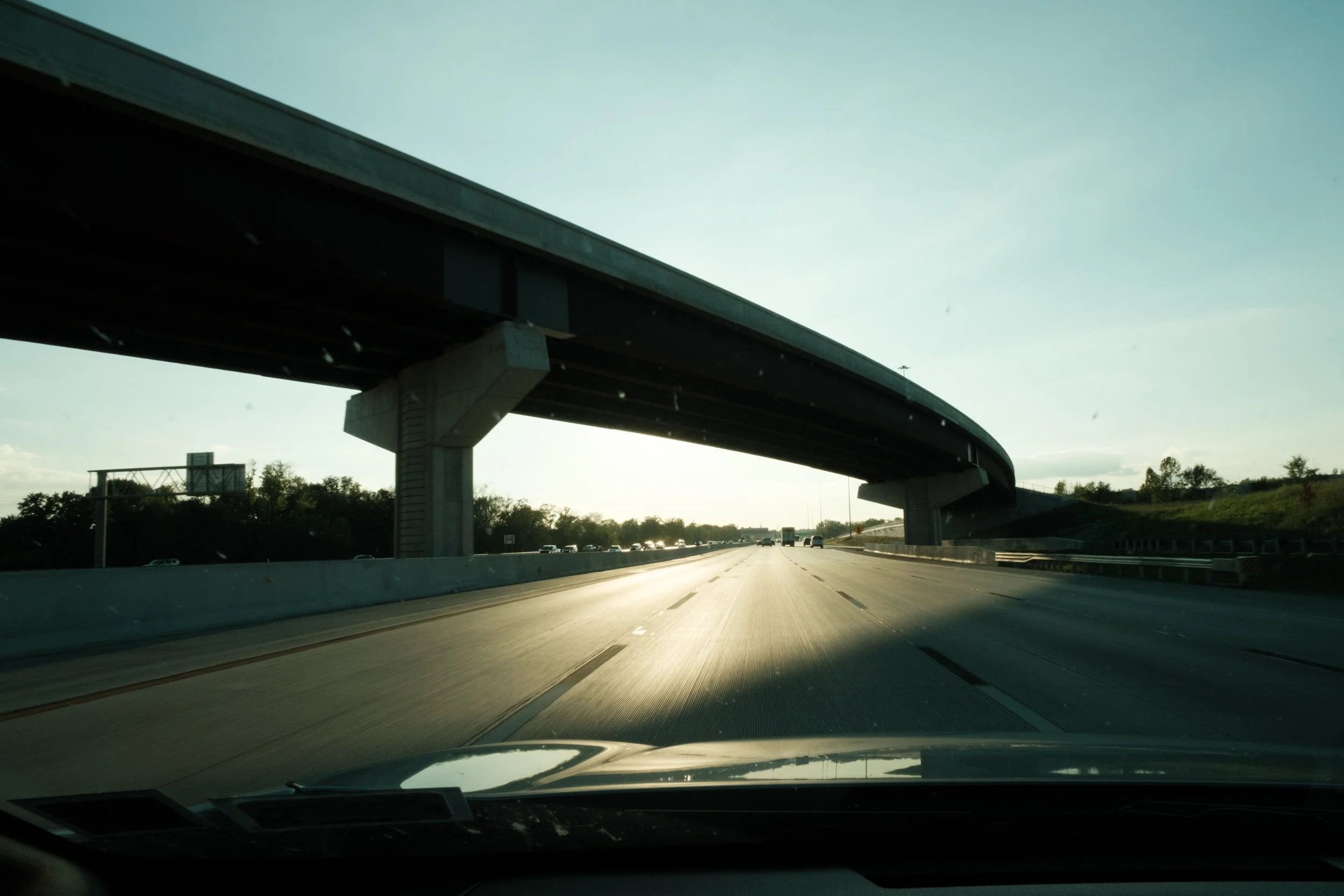
    Southbound in a car and wondering why.

    With an infinite number of destinations and pathways before us, I often wonder why so much of this feels so familiar. The drivers in the cars passing by—and those being passed—wear the same look of routine and recognition. There we all are, moving quickly from one familiar place to another, following well-worn routes toward known destinations. But where is the adventure in that?

    I’m so grateful to have been blessed with a curious spirit, a seemingly endless tolerance of being in motion, and a modest distain of routines.

    Contributor:

    In


  • Routines

    In motion from here to there.

    Contributor:

    In


  • The Shifting

    Contributor:

    In


  • September Lines

    Between Syracuse and Terre Haute, these were some lines that caught my attention.

    Contributor:

    In


  • Owáhiŋža Wakpá

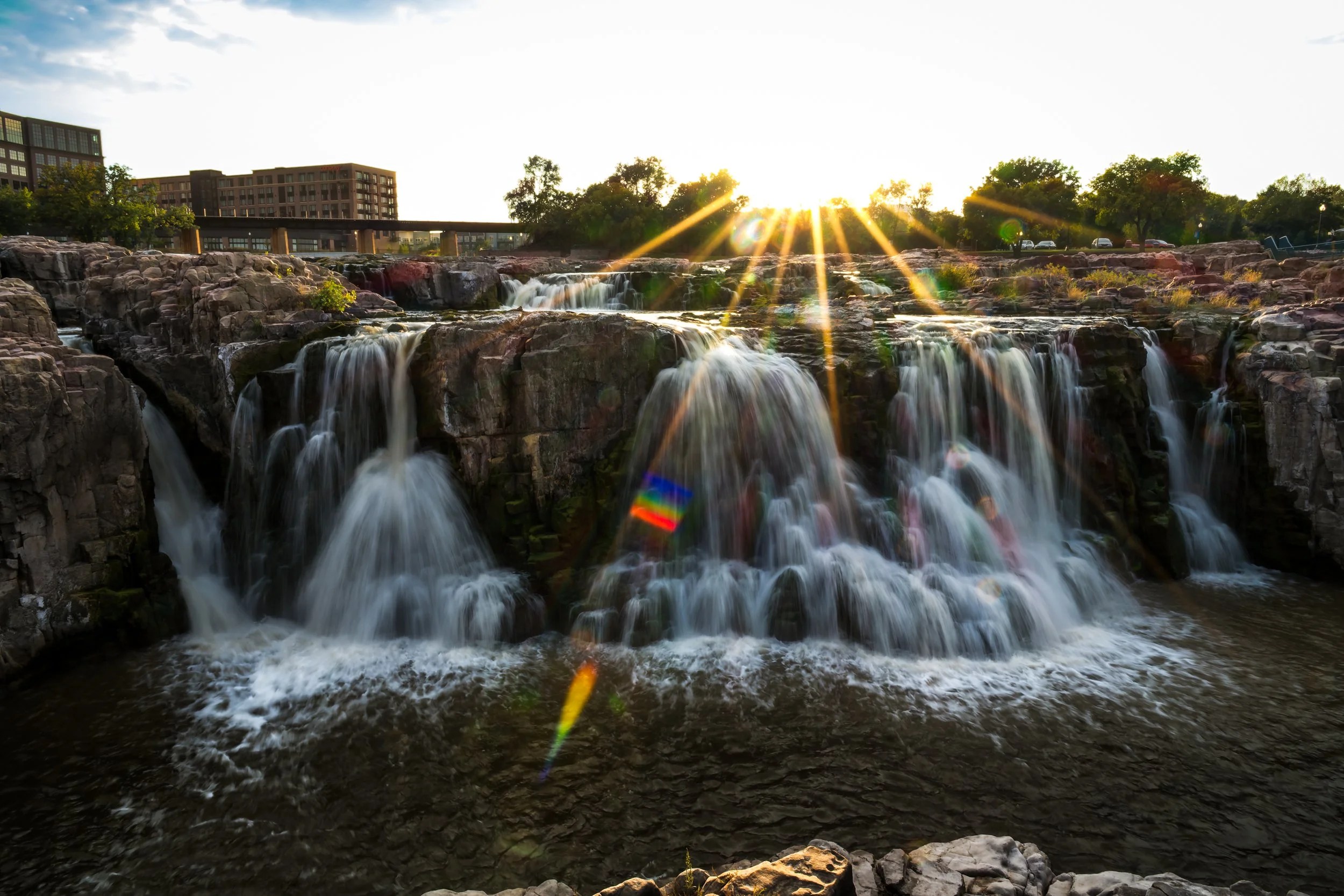
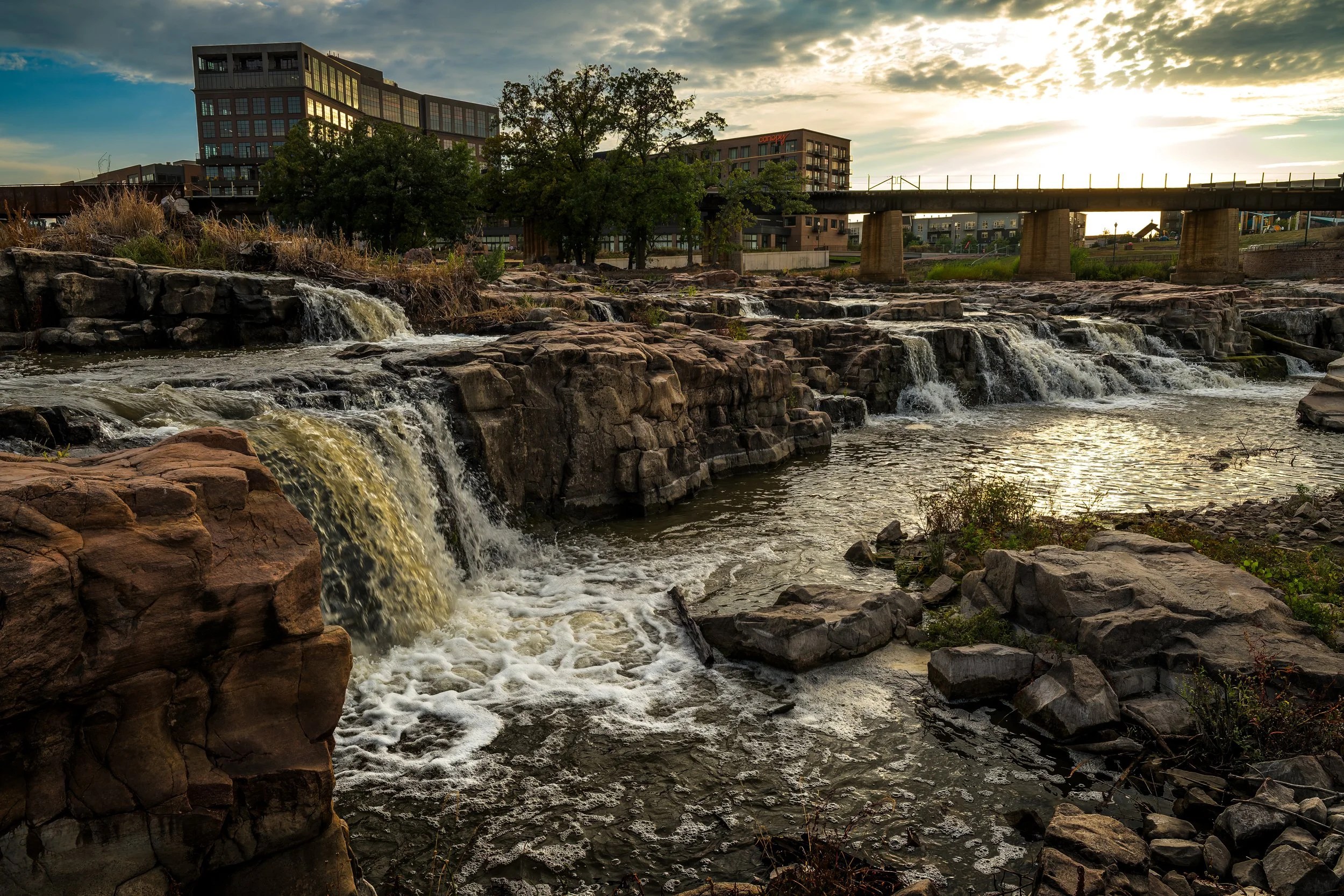
    The Geological Story of the Falls at Sioux Falls

    At first glance, the waterfalls in Sioux Falls appear to be exactly what their name suggests—water dropping over rock along the Big Sioux River. But the scene visible today is actually the result of a long and complicated geological story that stretches across billions of years. The falls are not simply a river feature; they are the meeting point of ancient stone, glacial forces, and a relatively young river landscape.

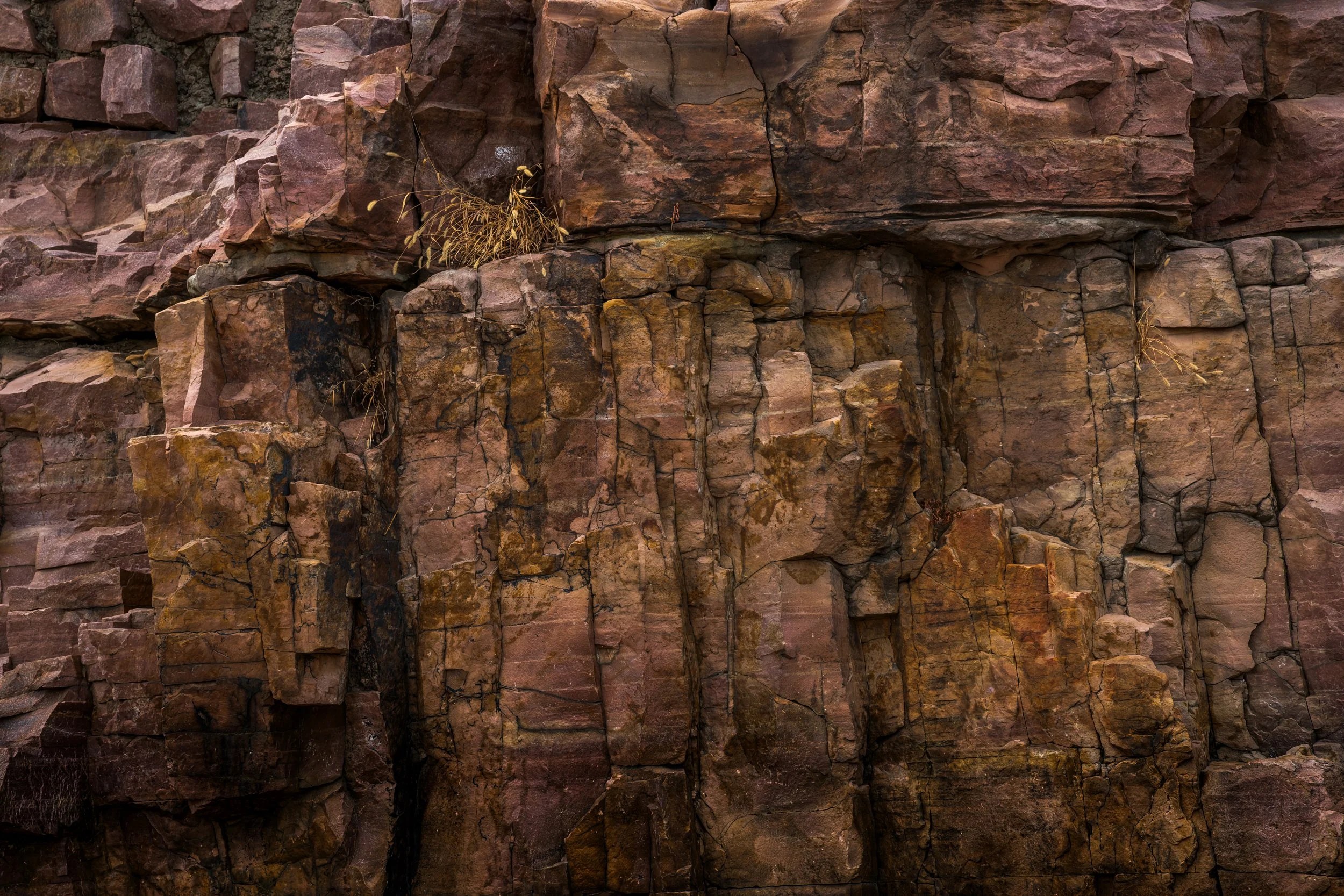
    The bedrock that forms the falls is known as Sioux Quartzite, a striking pink stone that underlies much of the region. This rock began as ordinary sand nearly 1.7 billion years ago, when the area was part of a shallow ancient sea. Over immense stretches of time, those sand deposits were buried, compressed, and heated deep within the Earth. The individual grains fused together into one of the hardest rock types found on the continent: quartzite. Iron oxide within the rock produced the distinctive pink color that now glows in the sunlight and gives the waterfalls their unmistakable appearance.

    (more…)

    Contributor:

    In


Recent Chronicles


Explore Topics

abandoned adirondack mountains adirondack park adirondacks adk ak alaska altmar ny animals antiques art automobiles beach black and white boats bridges buildings cars church classic chrome clouds cruise dirt road fall family farms fences fields flowers fog friends fujifilm glass grass green happy valley ny hdr houses ice iPhone jpg kimberly lake lake ontario leaves lights mazda mexico ny motorcycles mountains museums new york nikon ny nys olympus onondaga county ny oswego county ny oswego ny panorama park pennsylvania people plants rain reflections restaurants rivers roads rocks sand seasonal signs sky snow sony rx100M6 sooc state park steel steven j tryon stones streams sun sunlight sunset syracuse ny travel trees upstate ny vehicles walkabout walkabout chronicles water waterfalls waves weeds windows winter x100f x100v


Walkabout Chronicles Journal RSS